
Are you wondering what there is to do while camping? Camping offers a wealth of opportunities, from outdoor recreation and nature exploration to relaxing campsite entertainment. This guide will provide you with a comprehensive list of camping activities to make your next trip unforgettable, covering everything from tent setup to stargazing tips.
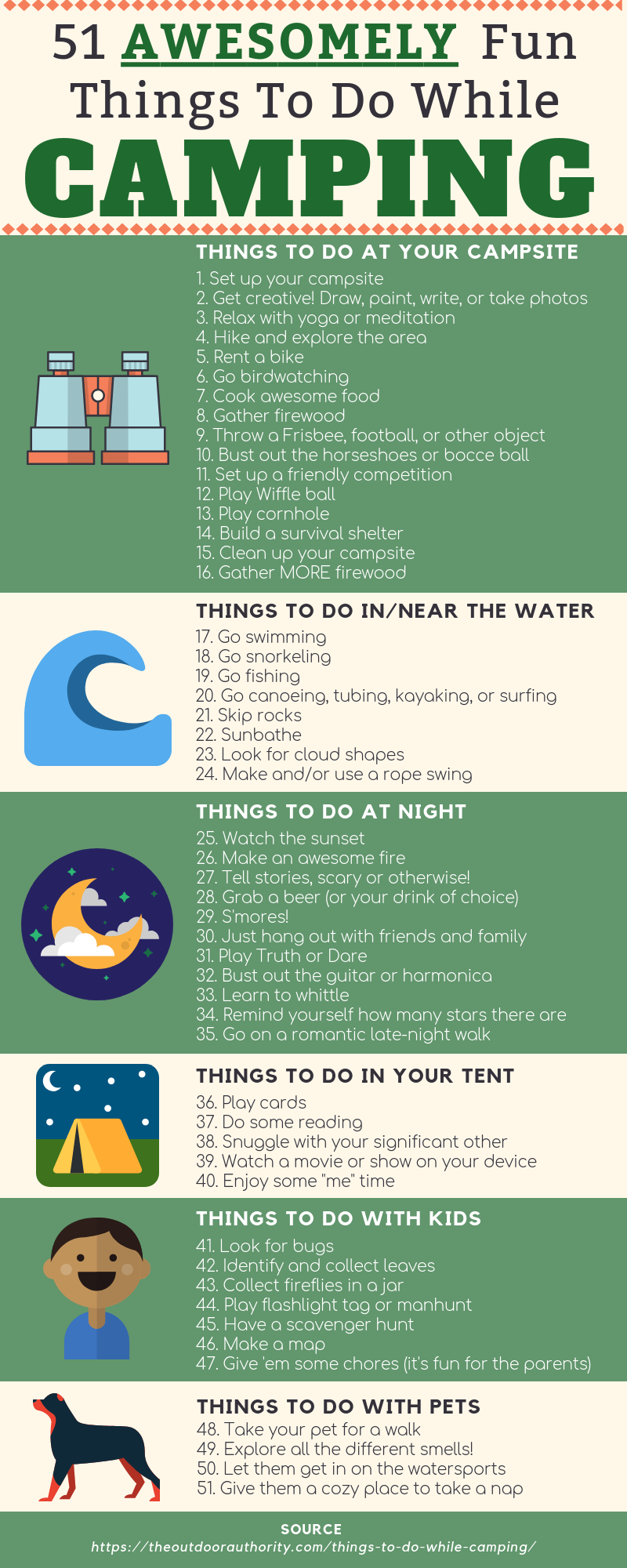
Image Source: theoutdoorauthority.com
Embracing the Great Outdoors: A Guide to Fun Camping Activities
Camping is more than just pitching a tent; it’s about immersing yourself in nature and creating lasting memories. The activities you choose can significantly impact your overall experience. Let’s explore some top options for outdoor fun.
Hitting the Hiking Trails
Hiking is a quintessential camping activity. It provides exercise, stunning views, and a chance to connect with nature.
- Planning Your Hike: Choose trails that match your fitness level. Research the trail length, elevation gain, and difficulty before you go.
- Essential Gear: Pack sturdy hiking boots, a map, a compass or GPS, plenty of water, snacks, sunscreen, and a first-aid kit.
- Safety First: Let someone know your hiking plans and expected return time. Be aware of wildlife and weather conditions.
Nature Exploration and Wildlife Viewing
Camping offers a prime opportunity to observe local flora and fauna.
- Identifying Plants and Animals: Bring a field guide to identify different species of plants, birds, and animals.
- Respecting Wildlife: Observe animals from a distance and never feed them. Store food properly to avoid attracting unwanted visitors.
- Leave No Trace: Pack out everything you pack in and minimize your impact on the environment.
Engaging in Outdoor Recreation
Beyond hiking, many other outdoor recreation options can enhance your camping trip.
- Fishing: If you’re near a lake or river, fishing can be a relaxing and rewarding activity. Make sure you have the necessary permits and equipment.
- Kayaking or Canoeing: Explore waterways from a different perspective. Rent a kayak or canoe and enjoy a leisurely paddle.
- Rock Climbing or Bouldering: For the adventurous, rock climbing or bouldering can be a thrilling experience. Choose safe routes and use appropriate safety gear.
- Mountain Biking: Many campgrounds offer access to mountain biking trails. Bring your bike or rent one and enjoy a challenging ride.
Campsite Entertainment and Relaxation
Not every camping activity needs to be strenuous. Sometimes, the best moments are spent relaxing and enjoying the simple pleasures of campsite life.
Campfire Cooking: Delicious Meals in the Wild
Campfire cooking is a fundamental part of the camping experience.
- Simple Recipes: Plan meals that are easy to prepare with minimal ingredients. Foil packets, one-pot meals, and grilling are great options.
- Essential Cooking Gear: Pack a portable stove, cookware, utensils, and food storage containers.
- Fire Safety: Always build your campfire in a designated fire pit and never leave it unattended. Keep water nearby to extinguish the flames.
Here are some campfire cooking ideas:
| Meal | Description | Ingredients |
|---|---|---|
| Breakfast | Campfire Pancakes | Pancake mix, water, oil |
| Lunch | Foil Packet Burgers | Ground beef, burger buns, cheese, onions, tomatoes, lettuce |
| Dinner | One-Pot Chili | Ground beef, beans, diced tomatoes, chili seasoning |
| Dessert | Campfire S’mores | Graham crackers, marshmallows, chocolate |
Camping Games and Activities
Keep yourself and your fellow campers entertained with a variety of camping games.
- Card Games: Pack a deck of cards for classic games like poker, rummy, or solitaire.
- Board Games: Bring small, portable board games like chess, checkers, or travel-sized versions of your favorites.
- Outdoor Games: Play frisbee, volleyball, or other outdoor games that require minimal equipment.
- Storytelling: Gather around the campfire and share stories, jokes, or scary tales.
Stargazing Tips: A Celestial Show
Camping offers an unparalleled opportunity to observe the night sky.
- Finding a Dark Spot: Choose a campsite away from city lights for the best stargazing experience.
- Using Binoculars or a Telescope: Bring binoculars or a telescope to get a closer look at stars, planets, and other celestial objects.
- Identifying Constellations: Download a stargazing app or use a star chart to identify constellations and planets.
- Patience is Key: Allow your eyes to adjust to the darkness for at least 20 minutes to see the faintest stars.
Here’s how to maximize your stargazing experience:
- Check the Moon Phase: A full moon can wash out fainter stars, so plan your stargazing for a new moon or crescent moon.
- Use a Red Flashlight: Red light preserves your night vision better than white light.
- Dress Warmly: Even on warm nights, temperatures can drop significantly after sunset.
- Lie Down: Bring a blanket or sleeping pad to lie on for a more comfortable viewing experience.
Mastering the Basics: Tent Setup and Campsite Organization
Before you can enjoy any camping activities, you need to set up your tent and organize your campsite.
Efficient Tent Setup
Setting up your tent correctly is crucial for a comfortable and safe camping experience.
- Choosing the Right Location: Select a level spot that is free of rocks, roots, and other debris.
- Following the Instructions: Read the tent setup instructions carefully before you begin.
- Securing Your Tent: Use tent stakes to secure your tent to the ground and prevent it from blowing away.
Here’s a step-by-step guide to tent setup:
- Clear the Area: Remove any rocks, sticks, or other debris from the campsite.
- Lay Out the Tent Footprint: Place the tent footprint (a tarp or ground cloth) on the ground.
- Assemble the Tent Poles: Connect the tent poles according to the instructions.
- Attach the Tent to the Poles: Clip or slide the tent onto the poles.
- Stake Down the Tent: Use tent stakes to secure the tent to the ground, pulling it taut.
- Attach the Rainfly: Drape the rainfly over the tent and secure it with buckles or clips.
Campsite Organization Tips
A well-organized campsite makes your camping trip more enjoyable and efficient.
- Designated Zones: Create separate zones for cooking, sleeping, and relaxing.
- Food Storage: Store food in airtight containers and hang it from a tree or use a bear-resistant canister to prevent animal encounters.
- Trash Disposal: Pack out all your trash and dispose of it properly in designated receptacles.
- Gear Organization: Use storage bins, bags, and organizers to keep your gear neat and accessible.
Here are some essential campsite organization items:
- Storage Bins
- Trash Bags
- Clothesline
- Lanterns or Headlamps
- First-Aid Kit
Diving Deeper: Advanced Camping Skills and Considerations
For those looking to enhance their camping prowess, exploring advanced skills and considerations can elevate the experience.
Navigation Techniques Beyond the Trail
While marked hiking trails are common, knowing how to navigate off-trail can open up new realms of exploration.
- Mastering the Compass and Map: Learn to use a topographic map and compass effectively to determine your location and direction.
- Understanding GPS Devices: Become proficient with GPS devices for marking waypoints, tracking routes, and navigating in challenging terrain.
- Natural Navigation Cues: Develop an awareness of natural cues like the sun’s position, prevailing winds, and terrain features to guide your way.
Wilderness First Aid Essentials
Being prepared for medical emergencies in the wilderness is paramount.
- Building a Comprehensive First Aid Kit: Assemble a kit that includes essentials for treating cuts, burns, sprains, allergies, and other common injuries.
- Learning Basic First Aid Skills: Enroll in a wilderness first aid course to learn how to assess injuries, administer care, and improvise solutions.
- Emergency Communication: Carry a satellite communication device or personal locator beacon (PLB) for summoning help in remote areas.
Leave No Trace Principles in Detail
Adhering to Leave No Trace principles goes beyond simply packing out trash.
- Minimize Campfire Impacts: Use a camp stove for cooking whenever possible and keep campfires small and contained.
- Respect Wildlife: Avoid approaching or feeding animals, and store food properly to prevent attracting them to your campsite.
- Dispose of Waste Properly: Pack out all trash, including food scraps and toilet paper, and bury human waste in a cat hole at least 200 feet from water sources.
- Leave What You Find: Avoid collecting natural objects like rocks, plants, or artifacts, and leave the environment as you found it.
Planning Your Trip: Location, Permits, and Preparation
Careful planning is essential for a successful camping trip.
Choosing the Right Campground or Campsite
The location of your campsite can greatly influence your experience.
- National Parks: Offer stunning scenery and well-maintained facilities but can be crowded, especially during peak season.
- State Parks: Often provide a balance of natural beauty and amenities at a lower cost than national parks.
- National Forests: Offer more primitive camping options, often with fewer amenities and greater solitude.
- Private Campgrounds: Provide a range of amenities and services, such as swimming pools, playgrounds, and Wi-Fi, but may lack the natural charm of public campgrounds.
Obtaining Necessary Permits and Reservations
Many campgrounds require permits or reservations, especially during peak season.
- Researching Permit Requirements: Check the regulations for the specific campground or area you plan to visit.
- Making Reservations Online: Use online reservation systems like Recreation.gov to book your campsite in advance.
- Understanding Cancellation Policies: Familiarize yourself with the cancellation policies in case you need to change your plans.
Pre-Trip Preparation Checklist
A well-prepared camper is a happy camper.
- Gear Check: Inspect all your camping gear to ensure it is in good working condition.
- Meal Planning: Plan your meals and pack all the necessary ingredients and cooking supplies.
- Weather Forecast: Check the weather forecast and pack appropriate clothing and gear.
- Emergency Plan: Develop an emergency plan in case of unexpected events or injuries.
Here’s a sample pre-trip checklist:
| Item | Description |
|---|---|
| Tent | Ensure all poles, stakes, and rainfly are in good condition. |
| Sleeping Bag | Choose a sleeping bag appropriate for the expected temperatures. |
| Sleeping Pad | Provides insulation and comfort for sleeping. |
| Cooking Supplies | Portable stove, cookware, utensils, fuel. |
| Food | Non-perishable items, snacks, and drinks. |
| Water | Plenty of water for drinking and cooking. |
| Clothing | Layers of clothing to adapt to changing weather conditions. |
| First-Aid Kit | Comprehensive kit with essential supplies. |
| Navigation Tools | Map, compass, GPS. |
| Lighting | Headlamp, flashlight, lantern. |
| Sun Protection | Sunscreen, hat, sunglasses. |
| Insect Repellent | Protect yourself from mosquitoes, ticks, and other insects. |
| Trash Bags | Pack out all your trash and dispose of it properly. |
Fathoming the Environmental Impact of Camping
It is crucial to be mindful of the environmental impact your camping has.
Minimizing Your Footprint
Reducing the negative effects on the natural world is essential.
- Stick to Marked Trails: Staying on trails prevents erosion and damage to plant life.
- Use Existing Fire Rings: Building new fire pits can scar the landscape.
- Proper Waste Disposal: Pack out everything you pack in, including food scraps.
- Conserve Water: Use water sparingly to avoid depleting resources.
Protecting Local Ecosystems
Understanding and respecting local ecosystems is vital.
- Learn About Native Plants and Animals: Avoid disturbing or removing anything.
- Be Aware of Fire Hazards: Follow fire safety guidelines to prevent wildfires.
- Respect Wildlife: Observe animals from a distance and never feed them.
- Keep Noise Levels Down: Excessive noise can disrupt wildlife and other campers.
Responsible Campfire Practices
Campfires can have significant environmental impacts if not managed correctly.
- Use a Camp Stove When Possible: Stoves are more efficient and leave no lasting impact.
- Keep Fires Small and Contained: Use existing fire rings and never leave a fire unattended.
- Burn Only Dead and Downed Wood: Avoid cutting branches from living trees.
- Ensure the Fire is Completely Extinguished: Douse the fire with water and stir the ashes until they are cold to the touch.
Frequently Asked Questions (FAQ)
Q: What is the best time of year to go camping?
A: The best time for camping varies depending on your location and preferences. Generally, spring and fall offer pleasant temperatures and fewer crowds. Summer can be hot and crowded, while winter can be cold and challenging but rewarding for experienced campers.
Q: Can I bring my dog camping?
A: Many campgrounds allow dogs, but it’s essential to check the specific regulations beforehand. Keep your dog on a leash, clean up after them, and ensure they don’t disturb other campers or wildlife.
Q: Who is responsible for maintaining campsites?
A: Campgrounds are typically maintained by park staff or campground hosts. However, it’s everyone’s responsibility to keep campsites clean and respect the environment.
Q: What are some essential safety tips for camping?
A: Essential safety tips include packing a first-aid kit, letting someone know your plans, being aware of weather conditions, storing food properly to avoid attracting animals, and never leaving a campfire unattended.
Q: What is the best way to store food while camping?
A: The best way to store food is in airtight containers, either hung from a tree or stored in a bear-resistant canister. This prevents animals from accessing your food and keeps your campsite clean.

Melody Smith is a passionate writer, outdoor enthusiast, and camping expert based in the Seattle Metropolitan Area. With a deep love for nature and adventure, she shares her personal experiences, tips, and insights on MyCampingPro.com. A seasoned camper and traveler, Melody combines her creative background in design and writing with her love for the great outdoors, offering practical advice and inspiring stories to help others make the most of their outdoor experiences. When she’s not exploring the wilderness, you can find her painting, collecting vintage treasures, or diving into a good book.