
Imagine capturing photos so sharp and detailed, they leap off the screen. Have you ever wondered what makes some cameras produce images that just look… better? That magic often comes from a larger sensor, and for many photographers, the dream camera boasts a full-frame sensor. But stepping into the world of full-frame mirrorless cameras can feel like navigating a maze.
The sheer number of choices can be overwhelming, leaving you wondering which one is truly worth your hard-earned money. You might be worried about spending too much, or perhaps you’re unsure if the advanced features will actually improve your photography. These are common worries when looking at these powerful tools.
This post is here to help you cut through the confusion. We’ll break down what makes a full-frame mirrorless camera special and guide you toward finding the perfect fit for your needs. You’ll learn what to look for, understand the key differences between models, and feel confident in your choice. Get ready to unlock your camera’s full potential and start creating stunning images.
Top Full Frame Mirrorless Camera Recommendations

- Compact, Lightweight and High-Quality RF Lens with a Versatile Zoom Range of 24-105 millimeter
- Optical Image Stabilization at up to 5 stops of shake correction
- Maximum Magnification of 0.4x and Minimum Focusing Distance of 0.66 feet in Auto Focus.
- Maximum Magnification of 0.5x and Minimum Focusing Distance of 0.43 ft. when using Center Focus Macro.
- Use the EOS Utility Webcam Beta Software (Mac and Windows) to turn your Canon camera into a high-quality webcam, or do the same using a clean HDMI output.


- High image quality featuring a new 24.2 megapixel full-frame CMOS sensor
- DIGIC X Image Processor with an ISO range of 100-102400, expandable to 204800
- High-speed continuous shooting of up to 12 fps with mechanical shutter and up to 40 fps electronic (silent) shutter, RAW burst mode and pre-shooting captures up to approx. 30 fps
- Dual Pixel CMOS AF II covering up to 100% x 100% area with 1,053 AF zones
- Automatic subject detection of people, animals, and vehicles using deep learning technology with new subjects to detect including aircraft, trains, and horses.(1)

- 33MP1 full-frame Exmor R back-illuminated CMOS sensor
- 8x more powerful2, next generation BIONZ XR image processing engine
- Up to 4K 60p11 10-bit 4:2:2 w/ full pixel readout in all rec. formats
- Real-time Eye-AF for humans, animals, birds for photo and movie
- Advanced movie features; Focus Map16, Breathing Comp14., S-Cinetone, S-log3, HLGAF Assist17

- 33MP full-frame Exmor R back-illuminated CMOS sensor.Operating temperature : 0 to 40 °C (32 to 104 °F), Rated input : 100 - 240 V , 50/60 Hz, 0.2 A.
- 8x more powerful, next generation BIONZ XR image processing engine
- Up to 4K 60p 10-bit 4:2:2 w/ full pixel readout in all recording formats
- 7K oversampling full-frame 4K 30p 10-bit 4:2:2 w/ no pixel binning
- Beautiful color expression made simple with S-Cinetone color profile
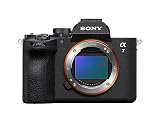
- A partially stacked Exmor RS CMOS image sensor features high-speed circuitry above and below the sensing layer. Sensor readout is approx. 4.5 x*1 faster than the α7 IV, maximum shutter speed is 1/16000 s, *2 blackout-free bursts at up to 30 fps are available with AF/AE tracking, *3 and video can be recorded at 4K 120p.*4 This advanced sensor contributes up to an unprecedented 16 stops of dynamic range*5 with smooth gradations.
- The new BIONZ XR2 processing engine delivers dramatic improvements in image and sound quality, communication, integration, and operation. It also incorporates AI-based Real-time Recognition AF and*6 Real-time Tracking, *7 plus accurate, stable color reproduction. A lightweight RAW format has been included, while user interface, networking, and file management functions have been refined for smooth workflow.
- The new 33.0-megapixel*8 sensor and BIONZ XR2 processing engine work together to deliver up to 16 stops of dynamic range. *9 Lifelike gradations from shadows to highlights enable highly effective HDR processing when needed, and effective noise reduction applied at all sensitivities achieves high resolution throughout the ISO 100-51200 still and movie range (expandable to 50-204800 for stills and 100-102400 for movies).
- An advanced optical stabilization unit, gyro sensors, and algorithm accurately detect and correct image shake. Up to 7.5-step central and 6.5-step peripheral stabilization*14 allows handheld shooting without having to boost sensitivity. The body also works with compatible lenses*15 for even better stabilization. Even shake that is amplified at telephoto focal lengths is effectively suppressed.
- AI processing in the new BIONZ XR2 processing engine improves recognition by approximately 30% over the α7 IV. Human pose estimation technology uses detailed form and pose data to achieve reliable human eye recognition as well as accurate recognition of body and head position, even with challenging subjects. Multiple subjects can also be recognized, making it possible to track the desired subject.

- Lightest, smallest full-frame EOS camera
- RF mount compatible with RF lenses and EF/EF-S lenses with optional mount adapter
- High image quality with 26.2 Megapixel Full-frame CMOS Sensor and DIGIC 8 Image processor
- Dual pixel CMOS AF for fast and accurate auto focus
- Use the EOS Utility Webcam Beta Software (Mac and Windows) to turn your Canon camera into a high-quality webcam, or do the same using a clean HDMI output.

- Step up to full-frame with Canon’s lightest full-frame RF Mount mirrorless camera featuring a 24.2 million pixel CMOS image sensor and DIGIC X Image Processor.
- An affordable and compact camera with built-in 0.39” 2.36 million dots OLED EVF up to 120 fps refresh rate and 3.0” 1.62 million dots vari-angle LCD touchscreen.
- Dual Pixel CMOS AF II covering up to 100% x 100% area with 1,053 AF zones with automatic subject detection of people, animals, and vehicles using deep learning technology, now including aircraft (jet planes and helicopters), trains, and horses.
- Uncropped 4K movie at up to 60 fps that is oversampled from 6K, Full HD High-frame rate movie recording at up to 180 fps2, and Canon Log 3 or HDR PQ. Max movie record time of 2 hours3 and UVC / UAC for webcam and streaming4
- Achieves high image quality such as improved resolution at low ISO speeds and low noise at high ISO speeds, wide dynamic range of still pictures, and significant improvement in rolling shutter compared to previous Canon cameras when shooting fast-moving subjects and quick panning.
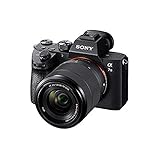
- Advanced 24.2MP BSI Full-frame Image Sensor w/ 1.8X readout speed Advanced 24.2MP Back-Illuminated 35mm Full-frame Image Sensor
- 15-stop dynamic range, 14-bit uncompressed RAW, ISO 50 to 204,800
- Up to 10fps Silent or Mechanical Shutter with AE/AF tracking
- 693 phase-detection / 425 contrast AF points w/ 93% image coverage
- In the box: SEL2870 lens, Lens hood, Lens cap, Lens rear cap, Rechargeable Battery (NP-FZ100), AC Adapter (AC-UUD12), Shoulder strap, Body cap, Accessory shoe cap, Eyepiece cup, Micro USB cable
The Ultimate Guide to Buying a Full-Frame Mirrorless Camera
Full-frame mirrorless cameras are amazing tools for anyone who loves taking pictures. They give you stunning photos with beautiful colors and sharp details. If you’re thinking about getting one, this guide will help you choose the best one for you.
What to Look For: Key Features
When you’re shopping for a full-frame mirrorless camera, pay attention to these important things:
- Sensor Size: This is what makes it “full-frame.” A bigger sensor means more light gets in, which makes your pictures look better, especially in low light.
- Megapixels: This tells you how many tiny dots make up your picture. More megapixels mean you can zoom in more or print bigger pictures without losing quality.
- Autofocus System: A good autofocus system quickly locks onto your subject. Look for cameras with many autofocus points and features like eye-tracking.
- Image Stabilization: This helps keep your photos sharp even if your hands shake a little. It’s great for shooting in dim light or when you’re moving.
- Video Capabilities: If you like shooting videos, check the resolution (like 4K or 8K) and how many frames per second it can record.
- Burst Shooting Speed: This is how many pictures the camera can take in one second. It’s important for capturing fast action.
- Screen and Viewfinder: A good screen helps you see what you’re shooting. A clear electronic viewfinder is also very helpful.
- Battery Life: Mirrorless cameras can use more battery than older cameras. See how many shots you can take on one charge.
Important Materials
Most full-frame mirrorless cameras have bodies made from strong materials.
- Magnesium Alloy: This is a strong and lightweight metal that makes the camera durable. Many high-end cameras use this.
- Plastic: Some cameras use tough plastics, which can make them lighter and more affordable.
What Makes Photos Better (or Worse)?
Several things affect how good your pictures look.
- Factors That Improve Quality:
- A good lens is super important. Better lenses capture more light and detail.
- Shooting in RAW format gives you more control when editing your photos later.
- Using the right camera settings for the situation makes a big difference.
- Good lighting is key to any great photo.
- Factors That Reduce Quality:
- Using a poor-quality lens will make your pictures look soft.
- Shooting in JPEG format with high compression can lose detail.
- Taking photos in very dark or very bright conditions without the right settings can lead to grainy or washed-out images.
- Shaky hands can cause blurry photos.
User Experience and Use Cases
Full-frame mirrorless cameras are great for many types of photography.
- For Beginners: They can be a big step up. Look for cameras that are easy to use but still offer room to grow.
- For Enthusiasts and Pros: These cameras offer the best quality and features for demanding photography.
- Use Cases:
- Portraits: The large sensor creates beautiful blurred backgrounds (bokeh) that make your subject stand out.
- Landscapes: Capture stunning details and wide views.
- Sports and Wildlife: Fast autofocus and burst shooting help you catch those fleeting moments.
- Travel: They are lighter than older professional cameras, making them easier to carry.
- Videography: Many offer excellent video quality for filmmakers.
Frequently Asked Questions (FAQ)
Q: What is a full-frame camera?
A: A full-frame camera has a sensor that is the same size as a 35mm film frame. This large sensor captures more light and detail, leading to better image quality.
Q: Are full-frame mirrorless cameras expensive?
A: Yes, they can be more expensive than cameras with smaller sensors, especially the camera body and the lenses.
Q: Do I need to be a professional to use a full-frame mirrorless camera?
A: No! While professionals love them, anyone who wants to take amazing photos can use one. Many models are user-friendly.
Q: What’s the difference between mirrorless and DSLR cameras?
A: Mirrorless cameras don’t have a mirror inside. This makes them smaller and lighter. They use an electronic viewfinder instead of an optical one.
Q: How important is the lens for a full-frame camera?
A: The lens is very important! A great camera needs a great lens to take its best pictures. Invest in good lenses.
Q: Can I use my old DSLR lenses on a full-frame mirrorless camera?
A: Sometimes, yes. You might need an adapter, but it depends on the brand and the lens mount.
Q: What does “ISO” do?
A: ISO controls how sensitive the camera’s sensor is to light. Higher ISO is good for dark places but can make photos look grainy.
Q: How do I choose between different brands?
A: Each brand has its strengths. Look at the features you need, the lenses available, and read reviews of specific models.
Q: Is image stabilization really that important?
A: Yes, especially if you shoot in low light or don’t always use a tripod. It helps prevent blurry pictures.
Q: What should I consider if I want to shoot video?
A: Look for high resolution (like 4K), good autofocus for video, and options for external microphones.

Melody Smith is a passionate writer, outdoor enthusiast, and camping expert based in the Seattle Metropolitan Area. With a deep love for nature and adventure, she shares her personal experiences, tips, and insights on MyCampingPro.com. A seasoned camper and traveler, Melody combines her creative background in design and writing with her love for the great outdoors, offering practical advice and inspiring stories to help others make the most of their outdoor experiences. When she’s not exploring the wilderness, you can find her painting, collecting vintage treasures, or diving into a good book.